
Punta Gorda Concrete vs Asphalt Driveways: Which Is Better?
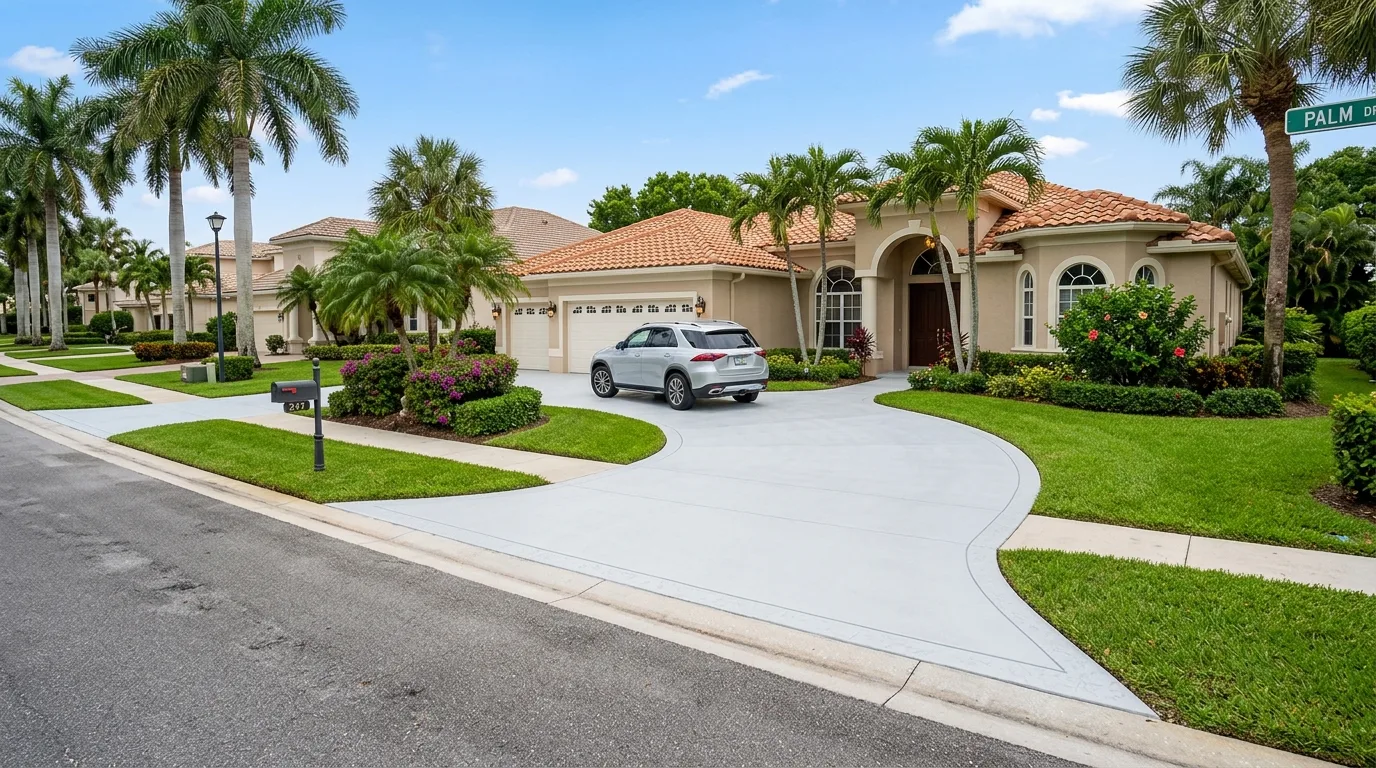
Is concrete or asphalt the right choice for your Punta Gorda driveway? Both materials work in Southwest Florida, but they perform very differently in Charlotte County’s subtropical climate — and the cost comparison looks quite different over 20 years than it does in the initial quote. In this post, we cover the real-world performance of both materials under Punta Gorda conditions, lifetime cost comparison, and the situations where each material makes the better choice.
Concrete Driveway Estimates — Punta Gorda
Call (888) 376-0955 for free written estimates on concrete driveway installation in Punta Gorda and Charlotte County.
Why Punta Gorda’s Climate Changes the Equation
The concrete vs. asphalt comparison that works in Ohio doesn’t translate directly to Punta Gorda. Charlotte County’s specific climate conditions hit asphalt particularly hard:
Punta Gorda averages summer highs near 92°F, and asphalt pavement surface temperatures regularly reach 130–150°F in direct sun — well past the softening point of standard asphalt binder. This means Punta Gorda asphalt driveways rut under parked vehicle tires during summer, require resurfacing more frequently than in northern markets, and show surface oxidation and cracking earlier than the same product installed in a temperate climate.
Concrete’s thermal behavior is more favorable. While concrete does expand and contract with temperature changes — which is why expansion joints are essential — it doesn’t soften or rut. Charlotte County’s UV intensity also affects both materials differently: it bleaches concrete but doesn’t structurally damage it; it oxidizes asphalt binder, causing brittleness and surface cracking within 5–7 years without regular sealcoating.
Side-by-Side Comparison for Punta Gorda
Initial cost:
- Concrete: $5–$8 per square foot installed
- Asphalt: $3–$5 per square foot installed
Lifespan in Charlotte County:
- Concrete: 30–50 years with proper installation and sealing
- Asphalt: 15–20 years before significant rehabilitation needed
Maintenance frequency:
- Concrete: Sealing every 3–5 years; crack repair as needed
- Asphalt: Sealcoating every 2–3 years; resurfacing every 5–8 years in Charlotte County heat
Performance in Punta Gorda’s heat:
- Concrete: Stable; expands at joints as designed
- Asphalt: Softens in summer heat; ruts under parked vehicles
Appearance options:
- Concrete: Plain, broom, exposed aggregate, stamped patterns, integral color
- Asphalt: Black only (gray with sealcoat)
Hurricane performance:
- Concrete: Excellent structural resistance; proper base prep critical
- Asphalt: Can be displaced by storm surge; more vulnerable to debris impact
Lifecycle Cost Comparison Over 30 Years
For a 640 square foot driveway in Punta Gorda:
Concrete over 30 years:
- Initial installation: $3,200–$5,120
- Sealing ×8 (every 3–4 years): ~$800–$1,200
- Crack repair (likely 1–2 events): ~$200–$500
- Total 30-year cost: ~$4,200–$6,820
Asphalt over 30 years:
- Initial installation: $1,920–$3,200
- Sealcoating ×12 (every 2–3 years): ~$1,800–$3,000
- Resurfacing ×2–3: ~$3,000–$7,500
- Major repair events: ~$500–$1,500
- Total 30-year cost: ~$7,220–$15,200
Asphalt starts cheaper and ends up costing significantly more over a 30-year period in Charlotte County — primarily because Charlotte County’s subtropical heat requires more frequent maintenance and earlier replacement. The concrete driveway cost guide provides a more detailed breakdown of initial installation pricing.
Punta Gorda Concrete Driveway Specialists
We explain every cost element before you commit. Free written estimates — (888) 376-0955.
When Asphalt Still Makes Sense in Punta Gorda
Despite the lifecycle cost disadvantage, asphalt does make sense in specific situations:
Very tight initial budget. If upfront cost is the binding constraint and you’re planning to own the property for less than 10 years, asphalt’s lower installation cost is a legitimate factor.
Agricultural or rural properties. Driveways on large rural lots in Charlotte County’s western areas where appearance is secondary to function sometimes use asphalt for its lower per-square-foot cost on long stretches.
Rental properties with short investment horizons. Some investors prefer asphalt’s lower upfront cost when the property will be sold or refinanced within 5–7 years.
When Concrete Is Clearly the Better Choice
Owner-occupied Punta Gorda homes. If you’re staying in your Charlotte Park, Harbour Heights, or Punta Gorda Isles home for more than 10 years, concrete’s lifecycle cost advantage is significant and the appearance upgrade is permanent.
Waterfront or premium properties. Concrete’s decorative options — stamped patterns, exposed aggregate, integral color — add property value that asphalt simply can’t match. For homes near Fishermen’s Village or along Charlotte Harbor, curb appeal is a real financial factor.
New construction. When pouring a new driveway from scratch, concrete’s initial cost premium over asphalt is relatively small compared to the long-term maintenance savings.
HOA communities. Many Punta Gorda Isles and Burnt Store Isles HOAs specify concrete for driveways and flatwork. Checking HOA requirements before choosing a material avoids expensive retrofits.
Practical Uses by Property Type
Standard single-family home in Charlotte Park: Concrete is the clear long-term choice — lower lifetime cost, better appearance, no summer rutting.
Upscale waterfront home in Punta Gorda Isles: Stamped concrete driveway — the decorative premium justifies the added cost and matches the property’s aesthetic standard.
Detached garage or workshop: Plain concrete slab approach makes sense; cost efficiency without sacrificing durability.
Rental investment property for resale within 7 years: Asphalt is arguably defensible given the short time horizon and lower upfront cost.
Commercial property near Fishermen’s Village: Concrete for parking and entry areas — durability under vehicle loads and professional appearance serve the business better long-term.
Frequently Asked Questions
Does concrete or asphalt last longer in Punta Gorda?
Concrete lasts significantly longer in Charlotte County conditions — 30–50 years versus 15–20 years for asphalt. Southwest Florida’s summer heat is the primary reason. Asphalt softens at surface temperatures that occur regularly here, while concrete’s performance in heat is structural rather than thermal. Proper installation and sealing extend both materials’ lives; without sealing, both deteriorate faster in Punta Gorda’s UV intensity.
Can I switch from asphalt to concrete in Punta Gorda?
Yes — asphalt removal and concrete installation is a common project in Punta Gorda. The process involves saw-cutting and removing the existing asphalt, grading the sub-base, compacting as needed for Charlotte County’s soil conditions, and pouring the concrete slab. Charlotte County permits are required for the new concrete installation. Cost to demo asphalt adds approximately $1–$2 per square foot to the project. See our concrete driveway service page for what the full replacement process involves.
Is concrete or asphalt better after a hurricane in Punta Gorda?
Concrete performs better in hurricane conditions. Storm surge can displace asphalt more easily than properly embedded concrete. Concrete’s structural integrity also resists damage from wind-borne debris better than asphalt. After Hurricanes Charley and Ian, many Punta Gorda homeowners switched from asphalt to concrete specifically for improved hurricane performance. See our complete guide to concrete services in Punta Gorda for more on hurricane-related concrete considerations.
Replace Your Punta Gorda Driveway With Long-Lasting Concrete
Punta Gorda Concrete Company — (888) 376-0955 — free estimates, Charlotte County permitted and inspected.
Related: