
Punta Gorda Soil Types: What They Mean for Your Concrete Foundation
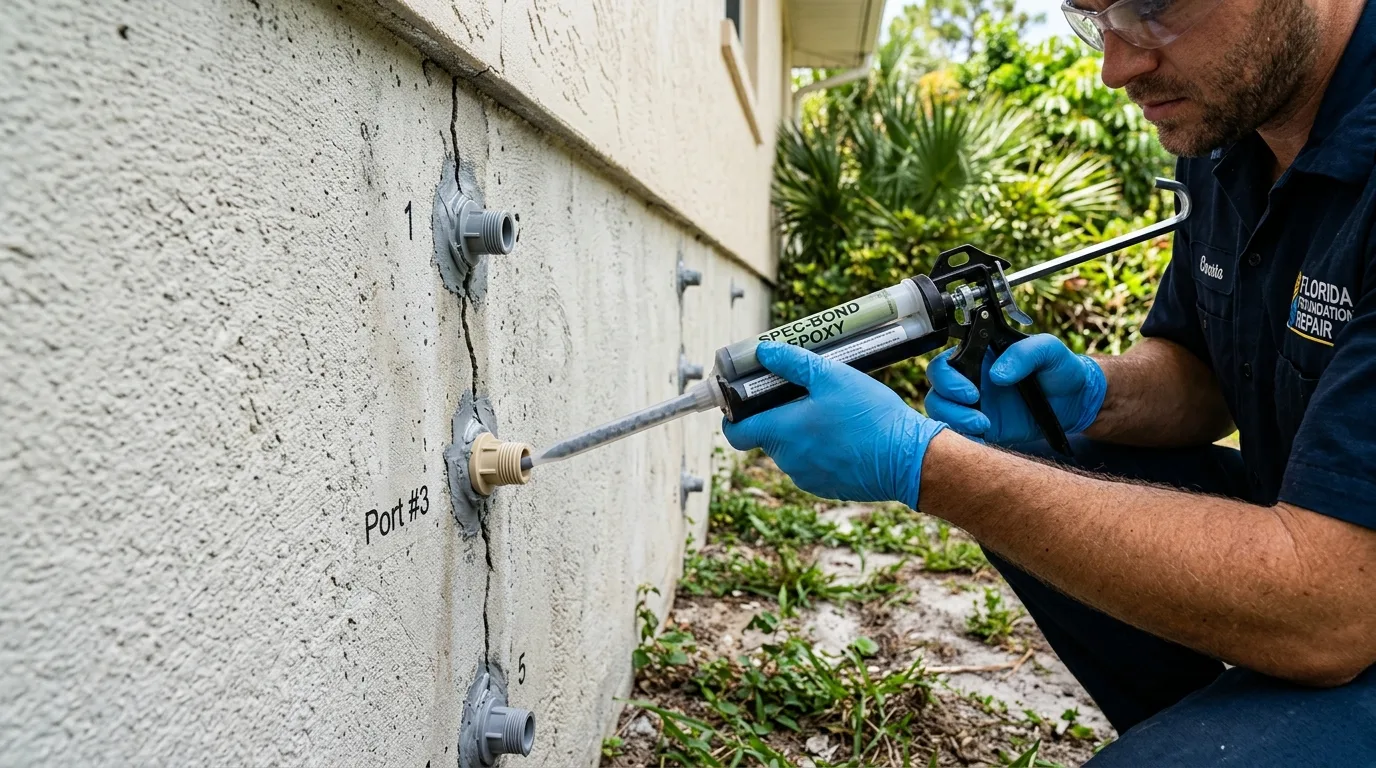
A homeowner in Charlotte Park called us after another contractor quoted $3,000 less than our estimate to pour a driveway slab. She took the lower quote. Two years later, the driveway had cracked in four places and settled an inch in the middle — the lower-priced contractor had skipped the base rock compaction that Charlotte County’s sandy soils require. The repair bill exceeded what she would have saved on the original project. This story repeats itself throughout Punta Gorda because the soil conditions here are genuinely demanding — and the consequences of ignoring them show up predictably in the first couple of wet seasons.
Concrete Built for Punta Gorda's Soil Conditions
Call (888) 376-0955 — we assess site conditions and design base prep for Charlotte County's specific soils.
Charlotte County’s Soil Profile: What’s Below Your Concrete
Charlotte County’s soils are a mix of sand, clay, silt, and coastal shell-and-coral fragments that vary significantly across short distances. Understanding what’s on your lot specifically matters for concrete design — the treatment for a deep sandy lot near Babcock Ranch is different from the treatment for a canal-adjacent lot in Punta Gorda Isles with high water table exposure.
Sandy soils are the dominant type across most of Charlotte County. Sandy soils drain quickly, which sounds positive — but they also lose load-bearing capacity dramatically when saturated. A concrete slab poured on poorly compacted sandy fill will begin to move when Punta Gorda’s wet season raises the water table and saturates the sub-grade. Sandy soils also lack cohesion, meaning they can be washed out under slab edges by concentrated drainage if the drainage design isn’t directing water away from the slab perimeter.
Clay and silt layers occur mixed with the sandy material across much of Charlotte County, particularly in older coastal sediment deposits. Clay is the problematic component: it expands when wet and contracts when dry, creating annual movement in the soil that pushes against slab edges and pries apart expansion joints. In Harbour Heights and along Charlotte Harbor’s older residential areas, clay layers sit close enough to the surface to affect flatwork without deep excavation.
Shell and coral-rich coastal deposits are common in Punta Gorda Isles and other waterfront areas. While shell provides some natural drainage capacity, the variable composition of this material means bearing capacity is inconsistent — high in one area of the lot and soft in another. Compaction testing is particularly valuable on shell-heavy sites because the density variation isn’t visible from the surface.
High Water Table: The Invisible Foundation Challenge
The high water table in Punta Gorda’s coastal areas is the factor that most contractors from outside the region underestimate. Lots adjacent to Charlotte Harbor, the Punta Gorda Isles canal network, and the tidal-influenced areas near Laishley Park Municipal Marina can have water tables as little as 2–4 feet below grade. During wet season, that water table rises closer to the surface — sometimes to within 18 inches of grade on low-lying lots.
A concrete slab without a properly designed vapor barrier and adequate drainage creates a scenario where moisture migrates upward through the slab, causing efflorescence (white mineral deposits on the surface), promoting mold growth in enclosed spaces, and accelerating reinforcement corrosion in older slabs without epoxy-coated rebar. Hydrostatic uplift pressure — water pushing up against the underside of the slab — can cause thin or undersized slabs to heave during peak wet season.
Charlotte County’s post-hurricane building standards address this explicitly for new construction: vapor barriers, proper drainage design, and adequate slab thickness are code requirements, not contractor upgrades. Our concrete slabs service page covers what the current foundation specification includes for new construction in Charlotte County.
How Proper Base Preparation Works for Punta Gorda Conditions
Proper base prep for concrete in Charlotte County involves three measurable steps:
1. Excavation to stable bearing material. If the top layer of soil is soft, disturbed, or has poor bearing capacity (as measured by a simple penetration test), it’s excavated and replaced with engineered fill. The depth of excavation depends on what’s found — sometimes a few inches, sometimes significantly more near waterfront lots.
2. Engineered fill placement and compaction in lifts. Crushed shell, limestone rock, or crushed concrete is placed in 4–6 inch layers and compacted with mechanical equipment. Each lift is compacted before the next is placed. This lift-by-lift approach is the only way to achieve consistent density throughout the base rather than surface-only compaction that leaves soft zones below.
3. Compaction testing. For commercial projects and some residential projects near problem soil areas, a soil density test (typically a nuclear density gauge test or cone penetration test) documents that the base material meets the required bearing capacity before concrete is placed. This documentation is required on some Charlotte County commercial permits and is good practice on any residential project where soil conditions are uncertain.
Base Prep Assessment for Your Punta Gorda Concrete Project
We assess site conditions before estimating — (888) 376-0955. No guessing on base preparation.
What Soil Conditions Mean for Concrete Pricing in Punta Gorda
Lots with challenging soils — soft fill, near-surface clay layers, high water table, or disturbed soils from previous construction — require more base preparation work, which adds cost to any concrete project. This is one of the primary reasons two quotes for the same square footage of concrete can differ substantially in Punta Gorda: one contractor is accounting for what’s below the surface and one isn’t.
A legitimate contractor will look at your lot conditions before quoting — either through site visit, soil probe, or asking you specific questions about the lot’s history, drainage performance, and previous construction. If a contractor gives you a price without discussing the site conditions at all, that’s a sign they’re quoting minimum base prep regardless of what the lot actually requires. See our concrete slab cost guide for how base preparation fits into the overall project budget.
Practical Soil Situations in Punta Gorda
Waterfront lots in Punta Gorda Isles: High water table, shell-rich soil, proximity to tidal influence. Require vapor barrier, adequate base rock depth, and concrete drainage design that prevents sub-base erosion. Foundation slabs may benefit from post-tension design.
Interior lots in Charlotte Park and Harbour Heights: Sandy fill soils typical of older residential development. Standard compaction with base rock compaction testing recommended. Driveways and patios need expansion joint placement coordinated with soil movement patterns.
New construction lots in Babcock Ranch: Recently developed lots with engineered fill placed by the developer. Compaction records should be available from the development; verify before assuming fill is adequately prepared. Active construction traffic may have disturbed some areas.
Historic Downtown District lots: Older lots near Punta Gorda’s 22-block historic district may have varied soil conditions from decades of construction activity. Any prior foundation or utility work can create areas of variable compaction that require remediation before new concrete is placed.
Frequently Asked Questions
How does Charlotte County’s soil affect my driveway lifespan?
Directly and significantly. Sandy soils with inadequate compaction create the settlement that causes driveway cracks within 3–5 years in Punta Gorda’s wet/dry cycle. Properly prepared soils under driveways in Charlotte County extend driveway life to 30+ years. The soil preparation under your driveway matters more than the concrete itself for long-term performance. Our concrete driveway service page covers base prep specifications for residential driveways.
Should I get a soil test before concrete in Punta Gorda?
For foundation slabs — yes, particularly on lots near the coast or on previously disturbed sites. For residential driveways and patios, a contractor site visit with visual assessment and a probe test is typically sufficient. For commercial projects, Charlotte County may require documented compaction testing as part of the permit. We assess site conditions on every estimate to include appropriate base prep in the project scope.
What is the relationship between soil and concrete cracking in Punta Gorda?
Most concrete cracking in Punta Gorda traces back to sub-base problems rather than concrete quality. When the soil beneath a slab moves — due to saturation during wet season, shrinkage during dry season, or void formation from drainage erosion — the slab flexes until it cracks. Concrete doesn’t crack because it’s weak; it cracks because what’s holding it up gave way. Addressing the soil conditions correctly before the pour is the most effective crack prevention available. Read our concrete repair guide for how to assess whether existing cracks reflect a sub-base problem.
Concrete Foundation Specialists for Charlotte County
Punta Gorda Concrete Company — (888) 376-0955 — we design for what's below the surface, not just what's on it.
Related: