
Punta Gorda New Construction Concrete: Babcock Ranch, Burnt Store & Beyond
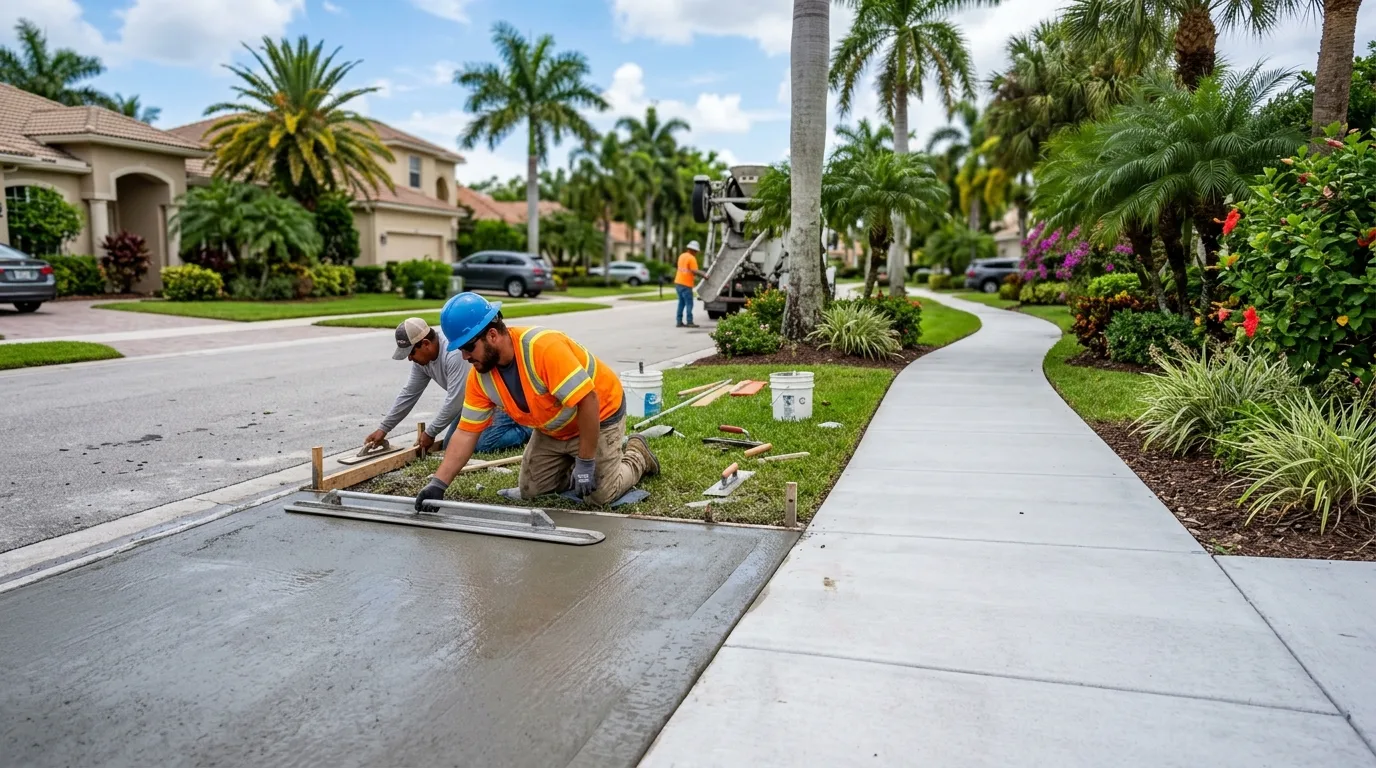
Punta Gorda is one of the fastest-growing areas in Southwest Florida, and the new construction activity in Babcock Ranch, Burnt Store Isles, and Charlotte County’s expanding western corridors means concrete foundation slabs and flatwork are being poured constantly. If you’re building or investing in a new property in the Punta Gorda area, understanding the concrete requirements — and what makes new construction concrete in Charlotte County different from other markets — is essential to getting it right the first time.
New Construction Concrete in Punta Gorda
Foundation slabs, driveways, and flatwork — call (888) 376-0955 for free estimates on new construction concrete.
The Punta Gorda New Construction Market in 2026
Babcock Ranch — the master-planned, solar-powered community north of Punta Gorda — has been one of the fastest-growing communities in the United States over the past five years. Its planned development structure means concrete contractors working in Babcock Ranch operate under community engineering standards that sit on top of Charlotte County’s baseline building code requirements. The development’s engineered fill program and documented compaction standards provide a better foundation baseline than many infill lots in older neighborhoods — but verifying that your specific lot’s fill records are complete is still a necessary step before foundation work begins.
Burnt Store Isles, the large gated community with golf course frontage in the western Punta Gorda area, is undergoing active construction and renovation across its residential lots. Concrete driveways, pool decks, addition foundations, and detached garage slabs are common project types. The community’s HOA requires architectural review board approval for all concrete flatwork before Charlotte County permit application — a two-step process that adds lead time to any project.
Charlotte County’s broader western corridor, where new development is filling in between Punta Gorda and Rotonda West, presents the most variable soil conditions of any growth area in the region. These transitional lots often sit on fill material placed by land developers without the documentation density that Babcock Ranch provides. Soil testing before foundation work is a prudent investment on any newly developed lot in this corridor.
New Construction Concrete Standards in Charlotte County
Charlotte County adopted significantly stricter foundation engineering requirements following Hurricane Charley (2004) and Hurricane Ian (2022). New construction concrete foundations must meet the Florida Building Code’s coastal construction requirements, which in Charlotte County’s wind zone include:
Anchor bolt specification. Foundation perimeter beams must include anchor bolts embedded to specific depths at defined intervals to meet the structural connection requirements for Charlotte County’s design wind speed. This is a post-Charley upgrade from the anchor bolt standards that governed pre-2004 construction.
Compaction documentation. Commercial projects and larger residential projects in variable soil areas require documented compaction testing before foundation concrete is placed. A soil density test confirms that the compacted base material meets the bearing capacity the engineering drawings specify.
Vapor barrier and drainage design. Charlotte County’s high water table in coastal areas requires an adequate vapor barrier to prevent moisture migration through the slab floor. Foundation drainage design that routes stormwater away from the structure is required for AHJ approval.
Engineering drawings. New construction foundation slabs require engineering drawings stamped by a Florida-licensed structural engineer. The engineer’s design is the document that the building inspection process verifies compliance with — the contractor’s job is to execute the design accurately. See our concrete slabs service page for what new construction slab installation involves.
Punta Gorda Foundation Concrete: 2026 Cost Context
New construction slab foundations in Punta Gorda run $8–$15 per square foot in 2026 Southwest Florida pricing. A 2,600 square foot residential slab — typical for a 3-bedroom home in Babcock Ranch or Burnt Store Isles — costs approximately $32,527 including all labor, materials, permits, and a 10% contingency. Ready-mix concrete delivers at $150–$220 per cubic yard in Charlotte County.
Active construction demand in Babcock Ranch’s community, combined with the broader Southwest Florida building market recovery post-Ian, has kept material costs and contractor availability tight during peak building season (November through March). Our concrete slab cost guide provides a complete itemized breakdown of the major cost components.
Foundation Concrete for Punta Gorda New Construction
We work on new construction projects throughout Charlotte County — call (888) 376-0955 for scheduling and estimates.
New Construction Flatwork: Beyond the Foundation
Foundation slabs are typically the first concrete pour on a new construction project, but they’re not the last. New construction projects in Charlotte County also commonly include:
Driveway installation. New construction driveways in communities like Babcock Ranch are typically poured after the home is framed and drywalled — keeping the pour schedule away from the heaviest construction traffic. See our concrete driveway service for standard residential specifications.
Pool deck and patio. Many Punta Gorda new construction projects include pool and patio concrete as part of the initial build, particularly in Burnt Store Isles where outdoor living space is a primary selling feature. Coordinating pool deck and patio pours with the foundation contractor simplifies the permit and inspection timeline.
Sidewalks and walkways. Charlotte County requires permitted concrete sidewalks and accessible routes for all residential development. New construction sidewalk concrete must meet ADA slope requirements and connect properly to the public right-of-way.
Detached garage and outbuilding slabs. Many Punta Gorda properties add detached garages, workshops, or storage buildings as part of the initial construction. These require separate foundation slabs with their own permit applications and inspection process.
Working With HOAs in Punta Gorda’s Gated Communities
Babcock Ranch, Burnt Store Isles, and other planned communities in Charlotte County have active HOA architectural review processes that run in parallel to Charlotte County permitting. For new construction concrete, the typical sequence is:
- Submit HOA application with construction drawings and material specifications
- Wait for ARB review and approval (2–6 weeks in most communities)
- Apply for Charlotte County building permit with ARB approval documentation
- Complete foundation, framing, and flatwork to approved drawings
- Schedule county inspections at each required stage
- Final county inspection and close-out; HOA final walk for compliance
Understanding this two-track process upfront prevents the schedule disruption that comes from starting the county permit process before HOA approval is in hand. We coordinate both tracks on every community project and advise on submission requirements for each community we work in regularly.
Frequently Asked Questions
What concrete standards apply to new construction in Babcock Ranch?
Babcock Ranch’s development standards sit on top of Charlotte County’s baseline code requirements. The community’s engineered fill program provides documented compaction data for most lots, but verifying your specific lot’s records is recommended before foundation work. Engineering drawings must meet Charlotte County’s post-hurricane coastal construction requirements in addition to Babcock Ranch’s community standards. We work in Babcock Ranch regularly and understand both sets of requirements.
How long does new construction concrete take in Punta Gorda?
A residential foundation slab in Charlotte County takes 3–7 days from site prep through pour. The full permit and inspection timeline — from application through final inspection — runs 3–6 weeks depending on project complexity and building department workload. Coordinating permit lead time with your general contractor’s schedule is the most important planning step. See our seasonal concrete scheduling guide for how to time new construction pours around Charlotte County’s weather patterns.
Do I need a concrete contractor before or after the builder in Punta Gorda?
For standard new construction where a general contractor is managing the project, the concrete contractor is typically a subcontractor brought in by the GC at the appropriate stage. For owner-built projects or projects where the owner is acting as their own general contractor, we work directly with property owners on permits, engineering coordination, and scheduling. Contact us at the design stage — before lot clearing or grading begins — to ensure soil assessment, permit timeline, and pour scheduling are integrated into your overall construction schedule.
New Construction Concrete — Punta Gorda and Charlotte County
Punta Gorda Concrete Company — (888) 376-0955 — foundation slabs, driveways, and flatwork for growing Southwest Florida communities.
Related: